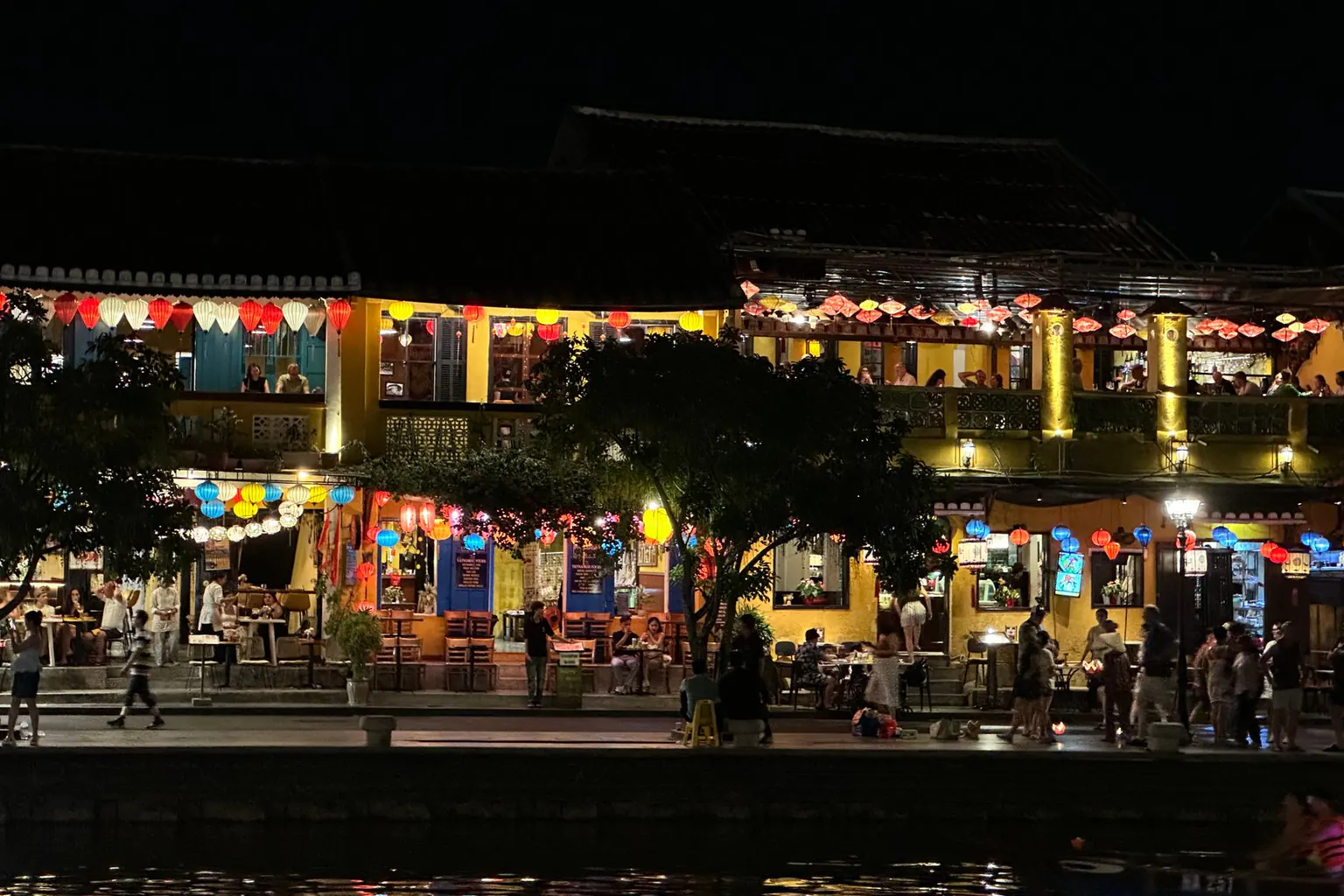
Getting Around Hoi An: Which Stretches to Walk, Which to Cycle and Which to Book a Private Car For
Hoi An's Old Town core suits walking during the vehicle-restricted hours; craft villages and the beach, about 3 to 7 km away, suit bicycles in cool weather. Groups with small children, suitcases or several stops in one session should book a private car.
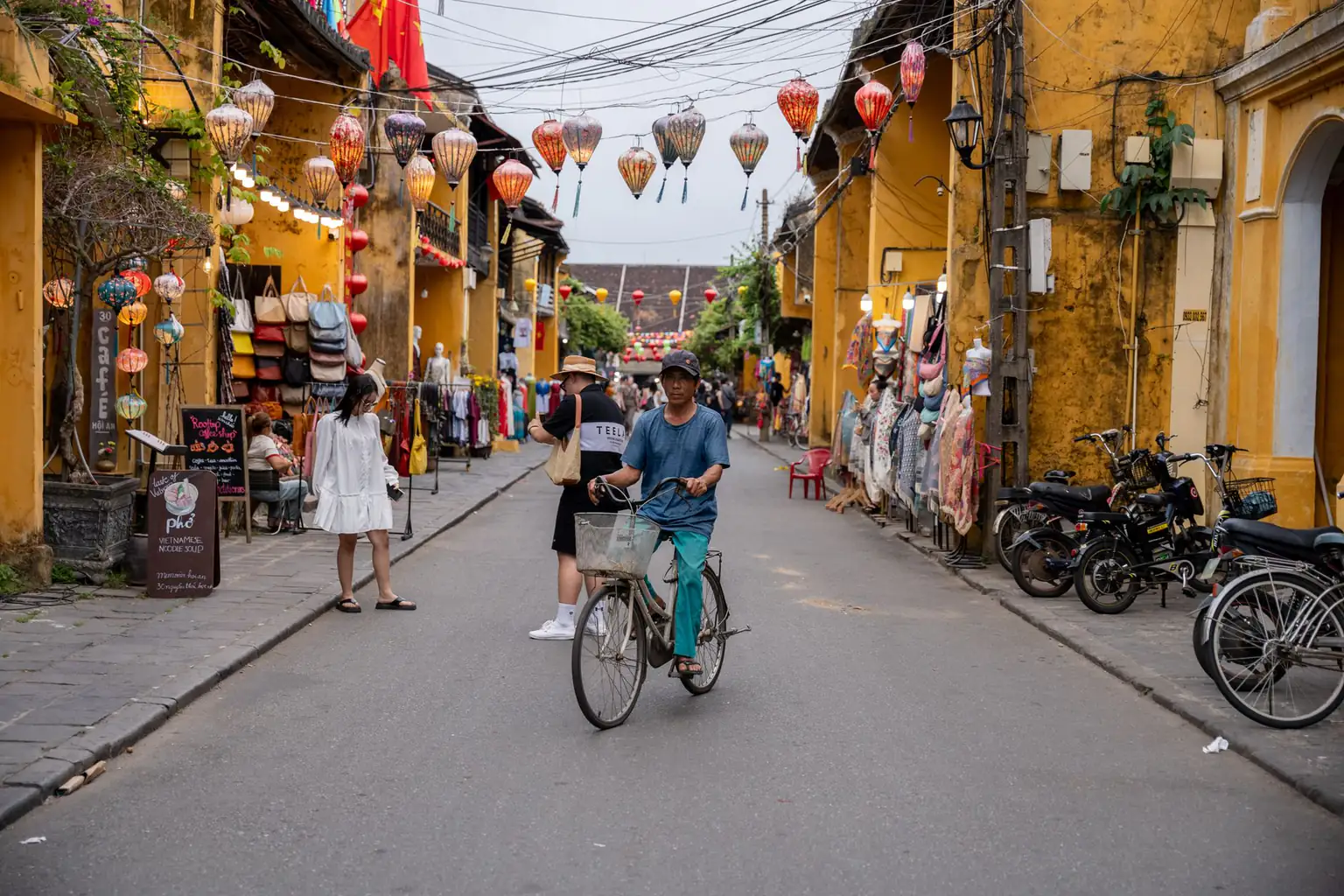
Table of Contents (7 sections)
- Choosing quickly by leg
- In the Old Town core: walking is the default
- Bicycles, cyclos, boats and electric shuttles: short hops and sightseeing
- Outlying areas: a bicycle is enough for one stop, a private car is worth considering when you combine stops
- Harsh sun, rain and high water: change how you travel before you change the schedule
- Hotels in the Old Town and 16-seat vehicles: fix the meeting point in advance
- Back to Da Nang and the airport: LK02 bus or private car
Choosing quickly by leg
| Leg | Distance | What usually fits | When to switch to a private car |
|---|---|---|---|
| Between sights inside the Old Town core | Core zone about 30 ha | Walking | Slow walkers, a large stroller, heavy rain or rising river water |
| Tra Que vegetable village, Thanh Ha pottery village | Tra Que about 3 km, Thanh Ha about 3 to 3.5 km | Bicycle in cool weather | Combining both in one session, buying pottery or other bulky items, harsh sun |
| Cam Thanh coconut forest | About 6 km, about 15 minutes by car | Bicycle early or late in the day | A whole group, or adding the Old Town in the same session |
| An Bang and Cua Dai beaches | About 4 to 7 km depending on the beach; An Bang is about 10 minutes by car, 25 to 35 minutes by bicycle | Bicycle if you are only strolling | Bringing swimwear, staying into the evening, travelling with young children |
| Marble Mountains, My Son, Ba Na | About 20 km, 40 km and 55 km | Not by bicycle in one day | Almost always a car |
| Airport and central Da Nang | About 30 km, 40 to 45 minutes by car | LK02 bus if luggage is light and your timing is relaxed | Suitcases, a fixed flight or train time, a group that needs to travel together |
In the Old Town core: walking is the default
The market, the assembly halls, the Japanese Covered Bridge and the Hoai River bank all sit within the heritage core, so you can link them on foot. For a specific route, see the walking route through the assembly halls; tickets are charged per site you enter, and how to choose sites is covered in Hoi An Old Town tickets.
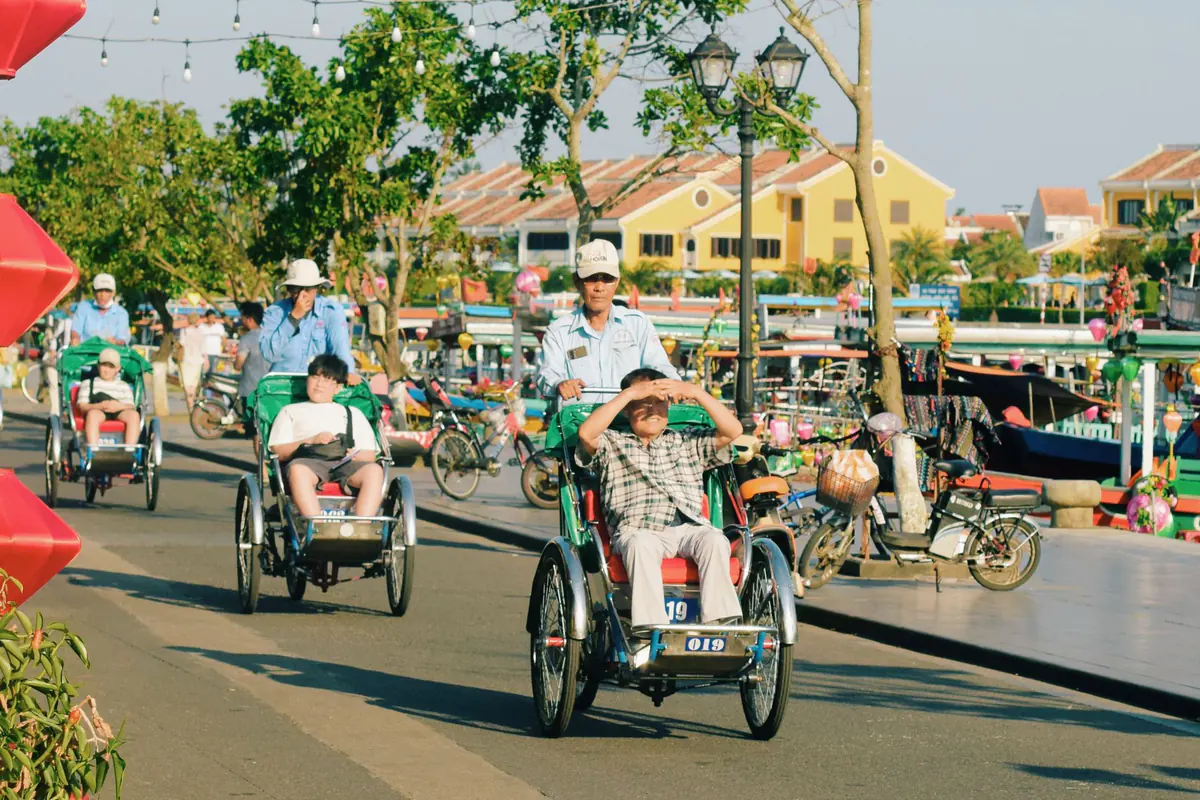
Whether a car can enter depends on the time of day. Hoi An reserves its streets for pedestrians and non-motorized vehicles during set hours, and cars and motorbikes are restricted from the core during those hours. The hours change between the summer and winter seasons and for events, and published times differ, so ask your hotel reception for the hours in force on your arrival date, or check the notice of the Hoi An Centre for Cultural Heritage Management and Preservation and the signs at the start of the street, before you set a pickup time.
For private car passengers this means the car does not pick you up in the middle of the core but at a point outside the perimeter, and you walk the last stretch. The streets are busier in the evening than in the day; how to choose a meeting point then is covered in pickup points around the Old Town in the evening.
Bicycles, cyclos, boats and electric shuttles: short hops and sightseeing
Bicycles are non-motorized, so they can usually use those streets; walk your bike where you see a no-riding sign or a dense crowd. Many hotels and homestays have bicycles for guests to rent; ask reception about the conditions and where to leave the bike when you stop. Outside the core, the roads to the beach and the villages carry a lot of motor traffic and some stretches have no divider, so riding early in the morning or late in the afternoon is more pleasant than at midday.
Cyclos and rowing boats on the Hoai River are two ways to see the town in a short time, run by local people. They are not for getting from one area to another. Ask the price, route and duration before you board, and do not take a boat when the river is high.
Multi-seat electric shuttles run by local operators follow set routes, mainly carrying visitors from perimeter car parks, such as the Ly Thuong Kiet car park, to Song Hoai Square. This works for the last stretch when a private car stops at a car park; ask the operator’s fare before you board. These are not two-wheeled electric motorbikes: if you want to get around faster than by bicycle on your own, Sun Travel rents motorbikes and electric scooters delivered to you in Hoi An and Da Nang.
Outlying areas: a bicycle is enough for one stop, a private car is worth considering when you combine stops
One stop on a cool morning is an easy ride. The difficulty comes when you combine stops: each extra stop is another stretch in the sun, another place to park and another ride back, so if you want three stops in one session with enough time at each, a private car keeps the pace better. Four common reasons to switch to a car:
- Belongings. Wet swimwear, Thanh Ha pottery or folded lanterns are bulky and easily damaged, and hard to carry by bicycle.
- The ride back. In the late afternoon many people leave the beach at the same time, so taxis and ride-hailing cars are harder to get, while a car you have booked is waiting at the car park.
- Who is with you. Young children and older travellers tire faster in the sun; the car gives them an air-conditioned place to rest between stops.
- Time at each stop. The driver waits at the car park of the attraction and picks you up at the agreed spot. When you send the request, say how long you plan to stay at each stop so the driver can plan the waiting time.
Details for each place are in the guides to Tra Que vegetable village, Thanh Ha pottery village, a half day at Cam Thanh coconut forest and the way from the Old Town to An Bang beach. Farther places such as My Son and the Marble Mountains are covered in where to go from Hoi An in a day.
Short legs around Hoi An such as Bay Mau coconut forest or the Marble Mountains, and the legs to the airport and central Da Nang, have listed prices by vehicle size on the page private car from Hoi An. For a stop with no listed route of its own, give the pickup point and the extra stops in your request and we will quote that leg.
Harsh sun, rain and high water: change how you travel before you change the schedule
At midday in the hottest months, roughly June to August, walking and cycling are most tiring. Split the day into two halves and leave the midday hours for a meal and a rest indoors or in the car.
In light rain, a thin raincoat and dropping a couple of stops still lets you walk. In long heavy rain or when the river is high, give up cycling and boat rides, switch to indoor stops (see Hoi An on a rainy day) and use the car for longer legs. The streets next to the Hoai River flood first; the driver then meets you on higher ground outside the perimeter, and how to choose the route and the meeting point is covered in Hoi An in the rainy season.
Hotels in the Old Town and 16-seat vehicles: fix the meeting point in advance
When you send the request, give your hotel name, map pin, number of people, number of suitcases and the pickup time you want. The driver picks a point with you outside the stretch where cars are restricted, then messages back the location, the car colour and the licence plate so you can find the right car. Ask in advance whether the hotel has someone to come to the meeting point and help with suitcases; if not, the driver helps put the luggage in the car at that point.
A 16-seat vehicle usually has to stop at the outer perimeter, farther out than 4- and 7-seat cars. The group’s meeting point needs to be fixed before the travel day, and the walk for the whole group with suitcases must be counted in the pickup time. Families with strollers or many suitcases can read how to choose a 4-, 7- or 16-seat car for a family with young children; on the way from the airport to Hoi An, choosing a drop-off point at a resort, in the Old Town or in a small lane describes three types of drop-off by place of stay.
Back to Da Nang and the airport: LK02 bus or private car
From Hoi An to the airport or central Da Nang is about 30 km, 40 to 45 minutes by car. The LK02 intercity bus runs from about 05:45 to 18:00, every 15 to 30 minutes, linking the car park at the Cua Dai inland waterway port with the Vietnam–Korea University stop in southern Da Nang and calling at the Hoi An bus station. The line does not start from central Da Nang and does not stop at hotel doors, so one or both ends need an extra taxi or ride-hailing leg. The bus operator sets the fare; ask the staff on board.
With suitcases, a fixed flight or train time, or a group that must travel together, a private car meets you at the agreed point and goes straight through. Da Nang to Hoi An: bus, taxi or private car compares the three by the decisions you need to make; the Hoi An to Da Nang direction uses the same criteria.
Frequently asked questions about getting around Hoi An
What is the starting price of a private car for getting around Hoi An?
There is no separate listed fare for short trips within Hoi An. The figures below are for the closest listed route, Hoi An → Bay Mau Coconut Forest: 4-seat car from US$6, 7-seat car from US$8 and 16-seat van from US$13 (including fuel, road tolls and parking). The fare for short trips within Hoi An is quoted after checking your pickup and drop-off points, itinerary and departure time.
Should we bring suitcases or a large stroller when walking inside Hoi An Old Town?
Do not bring suitcases, and bring only a folding stroller if you need one. Many old houses have high door thresholds and steps, and the stone paving is uneven, so a large stroller is hard to push. On check-in or check-out day, leave suitcases at reception or in the private car and carry only a small bag. If your group has a large stroller or many suitcases, give the number and size when you send the request so we can choose a car with enough luggage space.
Where should we meet the car if our hotel is in the Old Town?
Meet at a point outside the stretch of street where cars are restricted, usually a perimeter car park such as the Song Hoai Square car park or the Ly Thuong Kiet car park. When you send the request, give the hotel name, a map pin and the pickup time; the driver chooses the exact point for the restriction hours of that day and messages back the location and the licence plate. Ask hotel reception which restriction hours are in force.
Should we drop our cycling plans if the weather is harsh or rainy?
In harsh sun, move cycling to early morning or late afternoon and rest indoors at midday. Light rain still lets you walk in a thin raincoat, but in heavy rain or high river water give up cycling and boat rides, switch to indoor stops or use a private car for longer legs. If you have already sent a request, let Sun Travel know early when you change plans so the meeting point can move to higher ground.
What if the street with my hotel is restricted when the driver arrives?
The driver does not enter the restricted stretch but stops at the nearest point where cars may park, then messages the location, car colour and licence plate so you can walk out. For a 16-seat vehicle the stop is usually outside the perimeter, so fix it before the travel day and allow walking time for the whole group. If someone cannot walk far, say so in advance so a closer point can be chosen or the pickup time changed.
📚 More Travel Guides